Design
How to design a branded water bottle that gets used
Pure Arctic
Legibility at two metres, space around the logo and a label that curves away from the viewer. These are the design decisions that settle whether the bottle gets used.
5 min read
Sustainability
Written by Pure Arctic
4 min readLast updated: 30 July 2026
r-PET is recycled PET, the same material the deposit return bottles in the shop are made from. For a company about to brand a water bottle, the choice of material is no longer an environmental argument on its own. It is also a question of regulation, and of what is actually available.
Summary
PET is the plastic that the vast majority of drinks bottles are made from. It is light, it survives transport, and it can be melted down and formed again without the quality collapsing. r-PET is the same plastic after a round through a return system: collected, washed, ground down and formed into new granulate.
The difference from new plastic is not about how the bottle feels in the hand. A bottle in r-PET has the same clarity, the same weight and the same print surface as a bottle in virgin PET. The difference lies in where the material comes from, and in where it ends up afterwards.
That last point is worth pausing on. A bottle made from returned material, and which itself goes back into the same system, keeps the plastic in circulation instead of new raw material being taken out for every round. A branded bottle is rarely what decides the climate accounts of a company, but it is visible, it is handed out in the hundreds, and it gets noticed by people who have started asking questions about packaging themselves.
The EU adopted a directive on disposable plastic in 2019 that sets a floor for how much recycled plastic a drinks bottle has to contain. From 2025, PET bottles must contain at least 25 per cent recycled plastic, calculated as an average of all such bottles placed on the market in a member state. From 2030, 30 per cent applies to all drinks bottles made of plastic.
The requirement is written as an average for the market, not as a limit per bottle. That is worth noting, because it means a single bottle can sit both above and below the percentage without anyone having broken a rule. The point for a buyer is therefore not to look for a figure on the label, but to know what the supplier actually uses.
The packaging regulation adopted in December 2024 continues along the same track, with requirements for both recycled content and recyclability that take effect towards 2030. The direction is clear enough that a company ordering branded bottles today should know what the bottle is made of, including when the question comes from a customer and not from an authority.
Norway has one of the tighter return systems in Europe. Infinitum, which runs the deposit return system for bottles and cans, states that more than 90 per cent of plastic bottles come back. That is the mechanism that makes r-PET a real alternative and not just an ambition: the material exists, it has been collected, and it has been sorted.
For a buyer, that means r-PET is not a special order with extra waiting time. It is the standard material in the Pure Arctic bottles, in both sizes and in every variant.
The bottle itself is rarely the problem in a return system. It is the label, the adhesive and the cap that decide how easily the material can be sorted when the bottle comes back. A branded bottle is therefore not only a design choice, it is also a packaging choice.
Pure Arctic uses the same bottle format and the same label solution in every branded order. The design varies from customer to customer, the construction does not, and that spares the company from assessing the recyclability again for every campaign.
A branded bottle has two jobs. It has to quench a thirst at the stand or in the meeting room, and it has to say something about the sender afterwards. The material belongs to the second job, but it does not survive being shouted out. A fact that stands still does more than a promise that shouts.
Pure Arctic recommends treating r-PET as a piece of information. Put the material in the product sheet, mention it in the conversation at the stand, let it stand on the website. Then the company has the answer ready the day a customer asks about the packaging, and avoids having to work it out while the question hangs in the room.
If the material is to be assessed properly, four questions settle most of it. They are worth asking before an order is placed, whoever the supplier is.
Design
Pure Arctic
Legibility at two metres, space around the logo and a label that curves away from the viewer. These are the design decisions that settle whether the bottle gets used.
5 min read
Trade shows and events
Pure Arctic
Quantity, timeline and size are the three decisions that settle whether the bottles are ready when the stand opens. Here is the checklist that keeps them in order.
4 min read
Process
Pure Arctic
Design, confirmation, proof, production, delivery. Five steps, and a clear line for what has to be in place before the next one starts.
4 min read
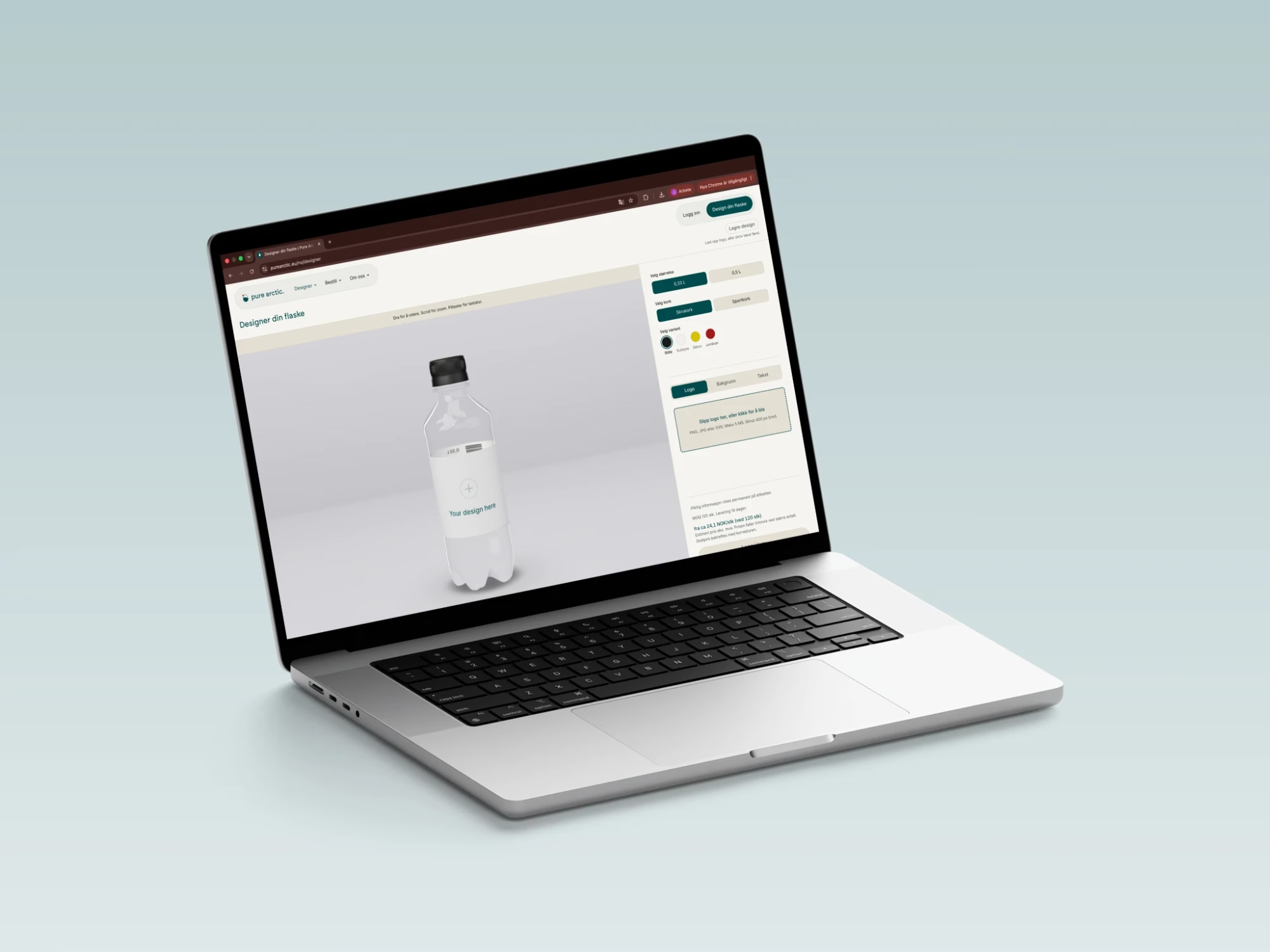
Upload the logo, choose a size and watch the bottle in 3D while the price updates. No cost before you order.
Design your bottle